
- Home/
- Buy Clomid in Online Pharmacy – Fast Delivery in United States
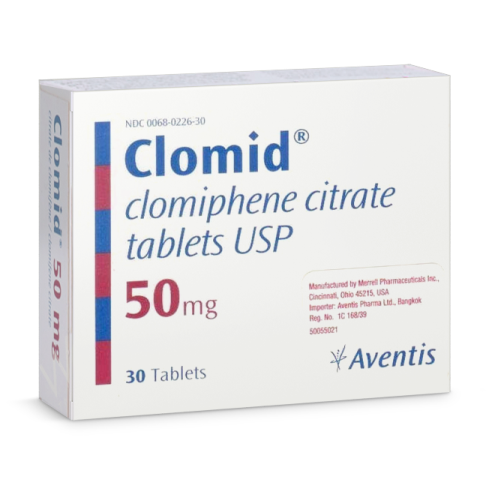
| Name of medicine | Clomid |
|---|---|
| Main pharmacological compound | Clomiphene citrate |
| Intended use | Treatment of female infertility (most commonly ovulatory dysfunction) |
| Strengths available | 50 mg tablets (most common), sometimes 25 mg and 100 mg |
| How quickly it starts working | Typically within the first ovulatory cycle after initiation |
| Effect duration | One ovulatory cycle per course; effect depends on continued cycles of use |
| How to take | Usually taken for 5 consecutive days early in the menstrual cycle |
| Prescription requirements in United States | Prescription only; Clomid is regulated by the FDA |
| Estimated price range (U.S.) | $10–$110 per cycle, dose and pharmacy dependent |
Clomid for Female Infertility: What to Know in the United States
Clomid, with the active ingredient clomiphene citrate, is a widely used medication aimed at addressing certain types of female infertility—most notably, problems with ovulation. It is a prescription drug legally regulated and available through licensed healthcare providers and pharmacies in the United States. Many women are prescribed Clomid as a first-line therapy to help them conceive.
Infertility: You Are Not Alone—And This Is Treatable
Struggling to conceive can feel isolating, but it is a common experience shared by many women and couples. According to the Centers for Disease Control and Prevention (CDC), approximately 12% of women aged 15–44 in the United States have difficulty becoming or staying pregnant (CDC, 2022). The World Health Organization further underscores that infertility affects millions globally. Importantly, the majority of infertility cases—particularly those related to ovulation problems—can be addressed with targeted treatments such as Clomid. Knowing you are not alone, and that many effective treatments exist, is the first step toward taking control of your reproductive journey.
How Clomid Addresses Ovulatory Infertility—What Actually Happens in Your Body
Clomid works by helping your body ovulate—the process where the ovary releases an egg, making pregnancy possible. In simple terms, Clomid tricks your brain into thinking your estrogen levels are lower than they are. This causes your pituitary gland to release more hormones (follicle-stimulating hormone and luteinizing hormone) that stimulate your ovaries to mature and release an egg. For many women with irregular periods or absent ovulation, Clomid restarts this process.
- The science: Clomid is a selective estrogen receptor modulator (SERM). It binds to estrogen receptors in the brain, blocking their usual action, and prompts an increase in reproductive hormone signals.
- What you may notice: Most women do not feel any different while taking Clomid, but ovulation may be detected by ovulation predictor kits, basal body temperature charting, or through regular menstrual cycles.
- When change occurs: Ovulation usually happens about 5–10 days after the last Clomid tablet of a treatment cycle. Fertility clinics often monitor with ultrasound or bloodwork, but home tracking is also possible.
While not every woman responds, about 70–80% of women with ovulatory dysfunction will ovulate on Clomid, according to American Society for Reproductive Medicine guidelines (ASRM, 2021). About 30–40% of those women will conceive within six cycles of use.
Who Should—and Should Not—Use Clomid? Concrete Scenarios
| Your Situation | Is Clomid Appropriate? | Why or Why Not? |
|---|---|---|
| You have irregular or absent periods and have tried to conceive for over a year | Yes, in most cases | Clomid is typically used as first-line therapy for ovulation induction when periods are inconsistent or absent, provided no other major fertility issues exist |
| You have regular periods but still cannot conceive after a year of trying | Possibly, but further evaluation needed | Other factors like tubal blockage or male infertility might be present; Clomid may not help unless ovulation is confirmed as the problem |
| You have been diagnosed with polycystic ovary syndrome (PCOS) | Often suitable | Clomid is frequently prescribed for women with PCOS who are not ovulating, though alternatives exist for certain cases |
| Your fallopian tubes are blocked or severely damaged | No | Clomid can induce ovulation, but if sperm and egg cannot meet, it will not result in pregnancy. Alternative treatments are required |
| Your partner’s sperm count is extremely low | Unlikely to help | Clomid does not address male factor infertility; other interventions are needed |
| You have unexplained infertility and basic testing is normal | Sometimes suitable | Some doctors may try Clomid empirically, though its effectiveness is lower in these scenarios |
| You are already pregnant or have liver disease | Not appropriate | Clomid is contraindicated during pregnancy and with certain liver conditions due to risk to mother and fetus |
This table should help you see which scenario most closely matches your situation. If you are unsure, a fertility specialist can provide tailored guidance and may recommend additional evaluation before starting or ruling out Clomid.
How to Use Clomid: Real-World Guidance and What to Expect
The standard Clomid regimen is straightforward but requires attention to timing for best results. Here is what most women in the United States experience:
- Starting the cycle: Clomid is usually started on day 3, 4, or 5 of your menstrual cycle. Your doctor selects the day based on your unique situation.
- Daily dosing: Take one tablet (typically 50 mg) once daily for five days in a row, at about the same time each day, with or without food.
- Ovulation monitoring: After the last pill, ovulation generally occurs 5–10 days later. Ovulation predictor kits, temperature charting, or ultrasounds may be used to track this.
- Intercourse timing: Plan intercourse every 1–2 days, starting a couple of days after your last pill and continuing for about a week.
- If you miss a dose: Take it as soon as you remember if it is within the same day. If a full day is missed, do not double up—continue as usual and inform your doctor.
- If it does not work: If ovulation or pregnancy does not occur after three cycles, your doctor may adjust the dose (up to 150 mg is sometimes tried) or recommend alternative approaches.
- What is normal: Some women notice mild hot flashes, headaches, or mood changes. These are commonly self-limited and not dangerous (see side effects below).
- What needs attention: Severe pelvic pain, visual disturbances, or shortness of breath are not normal—seek medical advice immediately if these occur.
- Length of use: Most fertility specialists limit Clomid to 3–6 cycles due to risk of diminishing returns and rare but serious side effects like ovarian hyperstimulation.
- Combination with other fertility medications: Sometimes Clomid is used with metformin (especially in PCOS) or combined with intrauterine insemination (IUI), but this should only be done under close medical supervision.
Throughout treatment, maintain open communication with your provider and record your cycle details.
Is Clomid Safe for Me? Contraindications Explained
Clomid is generally safe when prescribed appropriately, but there are clear situations where its use is not recommended due to specific health risks:
- Liver disease: Clomid is metabolized in the liver. Women with liver dysfunction should not take it because impaired processing can lead to toxicity.
- Ovarian cysts (not caused by PCOS): The medication may worsen non-PCOS ovarian cysts, increasing the risk of complications.
- Pregnancy: There is risk to the developing fetus. Clomid must not be used if you are or may already be pregnant.
- Unexplained uterine or vaginal bleeding: This must be evaluated before starting Clomid, as certain undiagnosed conditions could be worsened.
- Known hypersensitivity: Allergy to clomiphene or similar compounds is a contraindication due to the risk of severe allergic reactions.
If you have any of these conditions, discuss with your doctor and consider alternative fertility treatments that align with your health profile.
Typical Side Effects and When to Get Urgent Help
- Very common (usually mild): Hot flashes, abdominal discomfort, bloating, nausea, breast tenderness, mood swings, and headaches. These usually resolve on their own and do not require stopping the medication.
- Less common but important to monitor: Visual disturbances (spots, blurred vision, double vision). If these occur, stop taking Clomid and report to your physician right away.
- Rare but serious: Ovarian hyperstimulation syndrome (OHSS)—symptoms include severe abdominal pain, swelling, shortness of breath, and rapid weight gain. This is uncommon but requires immediate medical attention.
If you experience sudden or severe symptoms—difficulty breathing, swelling, severe pain, or signs of a severe allergic reaction (such as throat tightness or facial swelling)—call emergency services in the United States at 911. For medication-related emergencies or poison concerns, the national Poison Help line is available at 1-800-222-1222.
Most side effects are minor and transient, but always err on the side of caution and consult your provider about any new symptoms during treatment.
Drug Interactions—What to Avoid with Clomid
While Clomid has no well-documented dangerous interactions with most common medications, certain substances and situations warrant caution:
- Other fertility drugs: Combining Clomid with injectable gonadotropins or aromatase inhibitors should only be done under close specialist supervision to avoid excessive ovarian stimulation.
- Hormonal contraceptives: Using birth control pills or hormone patches while trying to conceive with Clomid will counteract its effects; Clomid should only be used when not on active hormonal contraception.
- Alcohol: While not strictly prohibited, heavy alcohol use may reduce fertility and complicate ovulation tracking. Moderate or abstain as you and your physician see fit.
- Supplements and herbal remedies: Some supplements may impact ovulation or hormone levels. Disclose all products you use to your fertility provider for a proper safety evaluation.
If you are on chronic medications (for example, thyroid treatment, antiepileptics, or psychiatric drugs), review your medication list with your gynecologist or reproductive endocrinologist before starting Clomid.
How Does Clomid Compare to Other Fertility Medications and Approaches?
Clomid is often the first medication considered for inducing ovulation due to its long track record, oral route, and relatively low cost. Here is how it compares to other options:
| Option | How it works | Main advantages | Main limitations |
|---|---|---|---|
| Clomid (clomiphene) | Oral SERM; induces ovulation by stimulating hormone release | Inexpensive, easy to use, effective for many women, low risk of severe side effects | Less effective if other infertility factors are present; side effects in some women; limited cycles recommended |
| Letrozole (Femara) | Aromatase inhibitor; also induces ovulation, especially in PCOS | May be more effective in some women with PCOS; fewer side effects for some | Not FDA approved for infertility (off-label use), cost may be higher |
| Injectable gonadotropins (FSH, hMG) | Direct ovarian stimulation via injections | More potent, used in resistant cases, suitable for IVF cycles | Expensive, higher risk of multiple pregnancies and OHSS, requires close monitoring |
| Metformin | Insulin-sensitizing agent; helps ovulation in PCOS with insulin resistance | Beneficial for select PCOS patients, especially when combined with Clomid | Less effective alone for ovulation induction, only for some women |
| Intrauterine insemination (IUI) / IVF | Assisted reproductive technology; sperm or embryo is placed directly in uterus | Addresses tubal/male issues, often used after failed oral medications | More invasive, costly, and complex; often not first-line for ovulatory issues |
Clomid is the best option for many women with ovulatory dysfunction and no additional complicating factors. However, for women with PCOS who do not respond to Clomid, letrozole is often tried next. Injectable fertility drugs and assisted reproductive technologies are considered if simpler approaches fail or if other infertility causes are present. A reproductive endocrinologist will tailor treatment based on your specific history and test results.
What You Will Actually Pay: The Full Cost Breakdown for Clomid in the United States
| Cost item | Amount (USD) | Note |
|---|---|---|
| Doctor consultation (initial) | $100–$350 | Varies by region, clinic, and insurance coverage |
| Prescription fee | $10–$50 | Sometimes included in consultation, sometimes separate |
| Clomid medication (per cycle) | $10–$110 | Depends on dosage, location, pharmacy, and insurance |
| Ovulation monitoring (optional) | $20–$200 | Home kits, bloodwork, or ultrasound; not required for every patient |
| Delivery (online pharmacy shipping) | $0–$25 | Depends on provider and shipping speed |
| Total | $140–$735 | Minimum is for those with insurance, maximum includes all out-of-pocket and optional costs |
Insurance coverage varies widely. Some plans cover the medication and monitoring, others treat fertility as an elective expense. Check with your provider and pharmacy if you are eligible for discounts or generic options, which are widely available in the U.S. Online pharmacies may offer lower prices but always verify they’re licensed. In all cases, a valid prescription from a U.S.-licensed provider is required for legal purchase.
Questions You May Still Have—And Honest Answers
- Can I use Clomid for more than six cycles? Most experts recommend against prolonged use beyond six cycles due to reduced effectiveness and increased risk of side effects. Your doctor may suggest alternative strategies if pregnancy hasn’t happened by then.
- Can Clomid increase the risk of twins? Yes, multiple pregnancies (mainly twins) occur in about 7–10% of Clomid-conceived pregnancies according to the CDC, 2022. The risk of higher-order multiples (triplets or more) is rare.
- Is generic clomiphene as effective as brand-name Clomid? Yes; the FDA ensures generic clomiphene meets the same standards as Clomid in the United States. Both are considered equally effective and safe when sourced from a reputable pharmacy.
- Can I buy Clomid online without a prescription? While some online pharmacies may offer Clomid without a prescription, this is not legal in the United States and carries risks of counterfeit or unsafe drugs. U.S. law requires a prescription, and trusted online pharmacies will ask for one.
- If I don’t ovulate with Clomid, what’s next? Your provider may increase the dose, switch to letrozole, or refer you for injectable fertility medication or assisted reproductive techniques. Additional testing for other infertility causes is often performed at this point.
- Should my partner also be tested? Yes. Male infertility is a factor in nearly half of infertile couples. A semen analysis is a standard part of a complete fertility workup.
If you are considering Clomid, know that the journey is individual—what works for one person may not work for another. Open communication with your fertility specialist, realistic expectations, and understanding both benefits and limitations are crucial to making the best decision for your reproductive health.